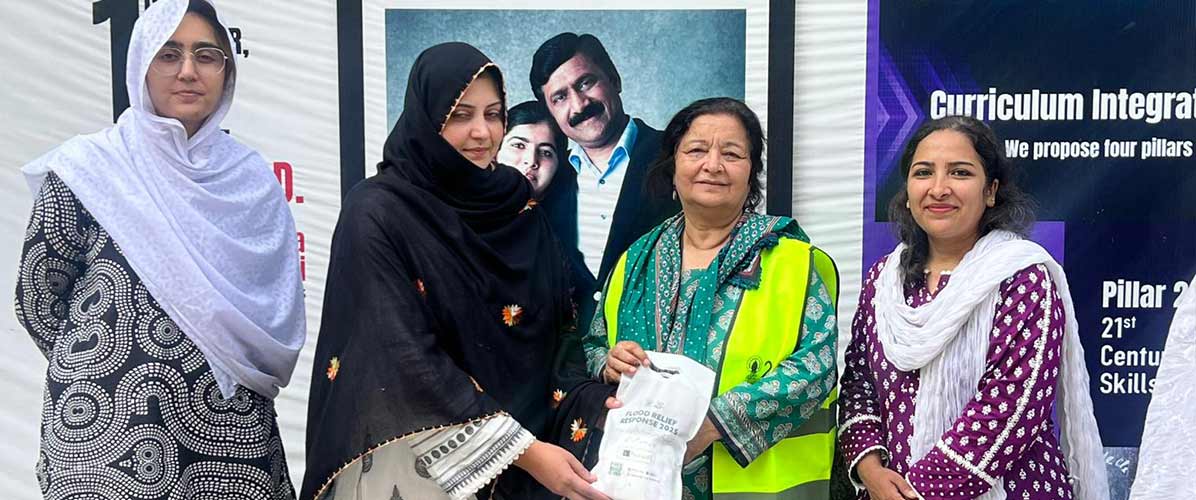
Breaking the Silence ITA’s Journey on Menstrual Health and Dignity (MHD) Fatima Jaffar: Senior Manager Life Skills ITA Idara-e-Taleem-o-Aagahi (ITA) has prioritized breaking the silence around menstruation as part of its Menstrual Hygiene Management (MHM) efforts. Although menstruation is natural for half the population, it remains shrouded in a deep culture of silence in Pakistan due to stigma, taboo, notions of impurity and misinformation. ITA works actively to change this through evidence-based advocacy, grassroots mobilization, alliance and capacity-building and creative campaigns emphasizing dignity and rights above all. Over time, ITA has engaged policymakers at national, provincial, and community levels to incorporate menstrual health into wider health, life skills and education agendas, relying on literature reviews, policy analysis, manuals, curricula, and government systems to identify gaps and opportunities for change. A focused desk review (2023 Young Omang-ITA) on young people’s SRHR, especially menstrual health, provided a foundation for program development and advocacy. Meanwhile, ITA has focused on attitude change and capacity building through workshops like Value Clarification and Attitude Transformation (VCAT), helping CSO members to overcome biases and approach menstrual health with empathy. Mentorship for grassroots CSOs in developing evidence-based MHM practices to generate policy briefs, holding bi-annual meetings and creating provincial networks fostered purposeful collaboration. Youth received foundational and advanced training on MHM to lead future initiatives. Youth have been key players in our journey. Over 1,000 youth ambassadors have been trained to raise awareness about MHM in schools, colleges, universities, and communities, creating a ripple impact of knowledge, attitudes and practices. Male engagement is a strategic priority, encouraging men and boys to understand menstruation and challenge stereotypes for supportive environment. Through our interventions, we have reached more than 5,000 direct beneficiaries and over 30,000 individuals indirectly, creating a widespread impact across communities. ITA embarked on MHM awareness and mobilization journeys across Pakistan’s most remote and underserved areas, including Shigar and many districts of Balochistan where cultural taboos and social restrictions often silence discussions about menstruation. A milestone was reached in Balochistan with the establishment of a pool of 30 MH Ambassadors to multiply the conversations on behavior change. Through a close partnership with the MHM secretariat, Education Department, sessions were organized in multiple schools, allowing young girls and boys to access accurate information, ask questions, and break free from the myths surrounding menstruation for generations. This outreach not only raised awareness but also made menstrual health a formal part of the education sector’s dialogue in the province of what keeps ‘girls away’ from education and/or leads to irregular attendance. Meanwhile, in Gilgit-Baltistan, the experience was both surprising and encouraging. Contrary to common assumptions about the region, participants showed a strong level of existing knowledge on Menstrual Hygiene and Management (MHM). This created space for in-depth, open discussions, where girls and boys actively engaged, shared perspectives, and explored solutions. The openness of these conversations became a powerful example of how even in remote areas, communities are ready to embrace menstrual health as a subject of dignity, rights, and empowerment once given the platform. During the devastating floods, ITA sprang into action to address both the urgent and long-term menstrual health needs of affected communities in distant areas. MHM was a first response in the relief efforts as volunteers prepared and handed over more than 1000 hygiene kits to the women and girls from Swat, Swabi, Kasur, Narowal and Multan who had lost access to basic necessities, making sure menstrual health wasn’t overlooked during the emergency. Beyond immediate relief, ITA also held awareness sessions on making and using reusable cloth pads, teaching women and girls practical skills that would serve them even after the emergency had passed. Community discussions were held in relief camps and villages, creating safe spaces for open dialogue on menstrual dignity, topics that are often silenced even in normal times. Partnerships and alliances were crucial in expanding the scale and impact of these interventions. Over 25 organizations including Mahwari Justice, Aahung, Simorgh,, Hamari Taqat, Bargard, Blue Veins, FPAP, WISE, Pakistan Institute of Education (PIE) and other partnered with ITA to distribute hygiene kits during emergencies, demonstrating the power of collective action. One standout partner was Embrace, which provided a steady stream of support by supplying more than 50,000 sanitary pads to vulnerable communities during the floods and beyond. This partnership with industry not only met immediate needs but also sent a powerful message of solidarity, demonstrating that menstrual health and dignity must remain a priority in humanitarian crises. Through digital campaigns and poster contests, ITA has sparked conversations, challenged taboos, and encouraged communities to embrace menstrual health with pride. The “Period Pride” campaign aims to normalize conversations around menstruation and foster positivity. Sub-campaigns like Period Positivity, Super Saheliyan, and Mahawari Sawari have resonated strongly. Recognizing collective voices’ power, ITA launched the Menstrual Health Awareness and Action Network (MHAAN), uniting stakeholders for advocacy and action. ITA also signed a MoU with the Health and Population Department (Rawalpindi) and engaged in policy dialogues to advocate for menstrual health as a key issue. Through digital campaigns and poster contests, ITA has sparked conversations, challenged taboos, and encouraged communities to embrace menstrual health with pride. The “Period Pride” campaign aims to normalize conversations around menstruation and foster positivity. Sub-campaigns like Period Positivity, Super Saheliyan, and Mahawari Sawari have resonated strongly. Recognizing collective voices’ power, ITA launched the Menstrual Health Awareness and Action Network (MHAAN), uniting stakeholders for advocacy and action. ITA also signed a MoU with the Health and Population Department (Rawalpindi) and engaged in policy dialogues to advocate for menstrual health as a key issue.