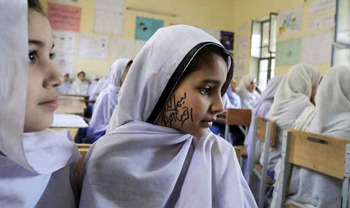
Transforming Classrooms in Umarkot: ITA's Visit to TaRL Training Practicums
Written By: Kanza Abbasi

With one of the world’s highest number of out-of-school children (OOSC) of around 25.3 million, and learning poverty as high as 77% according to the World Bank report, Pakistan stands in the midst of an ongoing education crisis, threatening to burst from the weight of compounding multidimensional difficulties such as poverty, lack of adequate healthcare, nutrition, climate induced disasters etc. In response to this challenge, the Prime Minister of Pakistan declared an Education Emergency in May 2024, mobilizing all stakeholders to address the issue on a systems-level and at scale. Pakistan’s education challenge has long been earmarked by the fact that interventions, no matter how bold and spirited, lose steam after its initial swell of enthusiasm. This happens when responses materialize in silos, and lack the strength to stand on their own for the long-term.
In an effort to push for sustainability, the government has pivoted to collate efforts with civil society organizations and international partners. The current rallying for education action, despite its challenges, is fashioned by transformative approaches, aligned to serve the relevant needs of our children suffering from the dual challenge of out-of-school and out-of-learning.
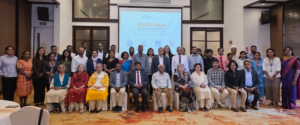
The district of Umarkot in Sindh, Pakistan, the birthplace of the reformist Mughal Emperor Akbar, dates back to the 11th century and is home to approximately 1.1 million people, nearly half of whom are youth, making it a place rich in both cultural heritage and demographic potential. However, according to the most recent Population Census (2023), the literacy rate there is as low as 38%, highlighting a significant crisis (national: 62%), as well as an opportunity for intelligent and impactful educational interventions. On a recent visit to Umarkot, the ITA team witnessed first-hand a quiet revolution unfolding in two government schools where TaRL (Teaching at the Right Level) training practicum was underway. As part of developing scalable, sustainable solutions for the multi-pronged crisis of education in Sindh, with around 7.8 million children currently out-of-school as per the Population Census 2023, the School Education and Literacy Department (SE&LD) is implementing an at-scale TaRL program across two high-need, high-impact districts; Karachi West (urban) and Umarkot (rural), supported by OPM-DARE and ITA as the technical assistance partner. The field visit to Umarkot post training of trainers revealed teachers and Headmasters/teachers engaged in their final practicums, applying TaRL methods to real multi-grade classrooms with commendable dedication and creativity.
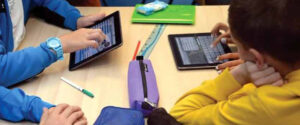
Gone were the rigid rows and robot-like routines that have long defined public classrooms. Instead, learners gathered in small, joyful circles, grouped by actual learning level rather than age or grade, where they engaged in vibrant, stage-appropriate reading and math activities using low-cost and no-cost materials. The practicum folders and manuals designed by ITA and approved by DCAR (Directorate of Curriculum, Assessment and Research) guided these sessions, giving teachers both structure and flexibility to meet their learners where they are. The teachers conducting the sessions also finally felt they could shoulder the challenging task of meeting children where their needs began; often at different stages of learning in the same classroom.
One Master trainer, Muhammad Mohsin, had this to say about the training:
“Jo TARL ka training program tha, wo bohat effective, aur jo field mein cheezain nazar aati hain, us ki bunyaad pe uska content banaya gaya tha, aur training bhi ushi level ki dee gayi thee.”
One of the most striking observations was the transformation in student engagement and agency, where children who might otherwise be passive or left behind were active participants, cheering for their peers, eager to solve problems, and visibly enjoying the collaborative learning process. The classrooms were alive with curiosity and encouragement, which is a stark contrast to the traditional chalk-and-talk model.
This is no small feat in Umarkot, a district where the education system is stretched. The latest Annual School Census 2023-24 reveals:
- A total of 2,246 schools, of which 2,022 are functional.
- A student-teacher ratio of 31:1, and a classroom-student ratio of 41:1.
- Alarmingly low infrastructure coverage in many schools: only 14% of schools have electricity, 42% have boundary walls, 52% have drinking water, and 75.1% have toilets.
In such challenging conditions, TaRL is not just a pedagogical shift, it’s a lifeline and possibly for a lifetime. By focusing on foundational skills and regrouping students based on ability rather than grade level, the approach tackles the core issue of “out-of-learning” head-on, so a fifth-grader reading at pre-K level is no longer an anomaly left to struggle silently and invisibly; they are recognized, regrouped, and supported with level-appropriate content. As TaRL embeds deeper into Umarkot’s schools in two sub-districts (talukas), its promise lies in both equity and efficiency. It uplifts students while empowering teachers, offering them a path forward in classrooms where grade-level heterogeneity is the norm.

SE&LD having finalized the Sindh ECCE and Foundational Learning Policy 2024 strongly supports this movement for fast tracking implementation, and is committed to walking alongside teachers, schools, and affiliate departments as TaRL scales further across Sindh. And our hope is that the meaningful and joyful learning we witnessed in Umerkot becomes a norm, not a rarity.