What Pakistan can learn about ECD from the Global South? Inspirations from the ARNEC Conference 2025
Written By: Mariam Shah

“Are children prioritized in our world?” This simple yet thoughtful question set the tone for me during the ARNEC Regional Conference 2025 in Manila. It invites each one of us working in the early childhood space to reflect deeply on how our systems, policies, and responses truly serve young children.
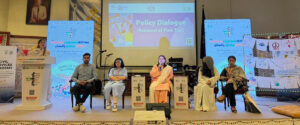
As I traveled to Manila, Philippines, to present findings from ITA’s recent study, “The 2022 Floods’ Impact on Young Children,” co-authored by Adil Ashraf and me, I focused on advocating for a multi-sectoral approach to Early Childhood Development (ECD) in Pakistan. Among the evidence I shared was that of a displaced father from Sindhabad (Karachi-East, an informal settlement originally formed after the 2010 floods and expanded with 2022 displaced families who relocated to Karachi after leaving their home districts due to the flood. He shared, “I brought my family to Karachi to keep them safe. We lost our home, and my wife lost her pregnancy because there was no medical help.” While I highlighted his voice, along with the lived experiences of thousands of families, setting the tone of our research and the urgency of our message for climate change actions I spoke about the gaps; limited access to learning spaces, food insecurity, disrupted health services, absence of localized data, and gaps in accessing social protection programs, there was a serious silence in the room. The thoughtful questions and reflections from the audience reflected how deeply we need to learn from the experiences of the Global South.
On a pre-conference day, the day-long workshop on Early Years and Climate Change opened our eyes to just how deeply climate change is impacting children from birth to age 8 and their caregivers. As we facilitated the sessions, the core finding during the sessions stays with me: empowering communities and local government to trickle down the system for a bottom-up approach. We talked about children and parents but how often are they involved in the process of developing the system? The time for action is now and Pakistan can learn a lot from the Global South, ARNEC has been working on this critical thematic area since 2006–08, drawing attention to the intersection of climate and early development long before it gained global urgency.
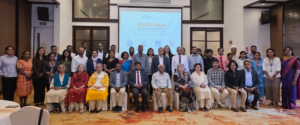
The conference brought together ECD leaders from 23 countries including from Bangladesh, Philippines, Indonesia, Bhutan, India, Kazakhstan, Srilanka and Nepal; while our languages, geographies, and governance structures differ, one fact resonated throughout: young children and their caregivers face complex vulnerabilities and the current landscape of ECD is not children centered sufficiently especially in times of crisis.

Philippines, with 54% of disaster-related displacement in 2024, continues to face the impact of typhoons, cyclones, and climate-related shocks across its islands. Yet with its unique and complex island geography, it has developed consistent ECD services across regions by focusing on strengthening local government systems. Under their RA 12199 Early Childhood Care and Development System Act (2025), the Philippines is empowering local governments to implement an integrated approach, ensuring children and families have access to a full range of services, including health, nutrition, early learning, and social protection. Whereas during crises, the localization of the DRRM plan and composition of Local DRRM councils help in providing structured support to ECD.
From Bangladesh, the powerful takeaway was the emphasis on strengthening communities and caregivers in the foundation of resilient ECD systems. BRAC Bangladesh’s ECD Play Labs stood out as a transformative model deeply rooted in community ownership and participation. These ECD play labs are designed, managed, and sustained by the communities themselves, creating safe spaces and stimulating environments for young children to learn through play. BRAC trains local facilitators and caregivers on curating relevant play material for Play Labs, which is low-cost, creative, and is a reflection of their identity and culture. The workshop by BRAC on Play Labs was extremely hands-on.
Similarly, India’s Mobile Creches model offers a compelling example of how early childhood development can be brought directly to the most underserved and displaced children, particularly those of migrant laborers at construction sites and in rural areas. These mobile creches now grown to National Creche Scheme to provide day care facilities to children (age group of 6 months to 6 years) of working mothers with safe spaces where young children receive early education, nutrition, and healthcare while their parents work. What makes the model particularly impactful is its strong collaboration with local governments with awareness and sensitization of the community. The wall murals, street theatre, home visits, group discussions and storytelling were the easy ways used to engage communities. Alongside creches, the “Anganwadi worker”, the backbone of India’s Integrated Child Development Services (ICDS), also plays a vital role in delivering essential ECD services to young children and mothers. This demonstrates another example of how community-based frontline workers are central to scaling up ECD. Mobile Creches have been an intrinsic part of the ARNEC journey, sharing enriching examples of what is possible at scale in ECD- deeply caring for children and caregivers. This is very relevant learning for us in Pakistan with same dynamics and cultural mindset.

These efforts from countries across the Global South are a powerful reflection for Pakistan, highlighting the urgent need to build a resilient and inclusive ECD system by strengthening local government structures, capacity, response systems, and actions for ECCE with stronger systems of the Nurturing Care Framework (NCF) at the school and system level. We, at ITA, believe that schools can adopt the five pillars of NCF through a multi-sectoral approach as is being progressively adopted by the School Education and Literacy Department (SELD) Govt. of Sindh. The experiences shared, particularly from the Philippines, Indonesia, Cambodia, India, Bhutan, and Bangladesh, prove the impact of empowering local structures to reach marginalized and displaced communities through inclusive, community-led, and local government models. For Pakistan, this means reimagining ECE and ECD not as separate programs, but as one integrated system for the holistic well-being of both child and caregiver. It also means embedding equity, climate resilience, and child rights into the core of all early years planning and above all, financing of ECCE. We need to dig deeper in the financing options for early years.
This year, ARNEC launched an excellent and highly adaptable Toolkit on Early Years and Climate Change, crafted with the realities of the Global South in mind. Rooted in lived experiences and practical solutions, this toolkit can empower local actors to respond, adapt, and build resilient ECD systems that truly protect the young ones in times of crisis. The amazing keynote speakers, authorities on early years, bold ministers, mayors and champions of early learning, practitioners, and young voices enriched my imagination and resolve to become a more dedicated champion for early years research, policy advocacy and above all actions.

It’s a realization that many countries in the Global South are taking bold, child-centered, and system-driven approaches to ECD, often with stronger local government leadership. The key takeaways and reflections from the ARNEC conference reinforced the need for action for local governance, inclusion, always play- based learning and parenting, adequate financing and climate change actions. For the latter, first, there is a growing need to raise awareness and build knowledge about climate change among parents, teachers, and local leaders. Second, integrating climate change education into early childhood programs is essential for preparing communities to adapt and respond. Third, climate-related disasters, floods, heatwaves, and displacement have deep and lasting effects on young children’s emotional well-being, learning, and behavior. These discussions urge us to act now, building systems that are both resilient and nurturing.